
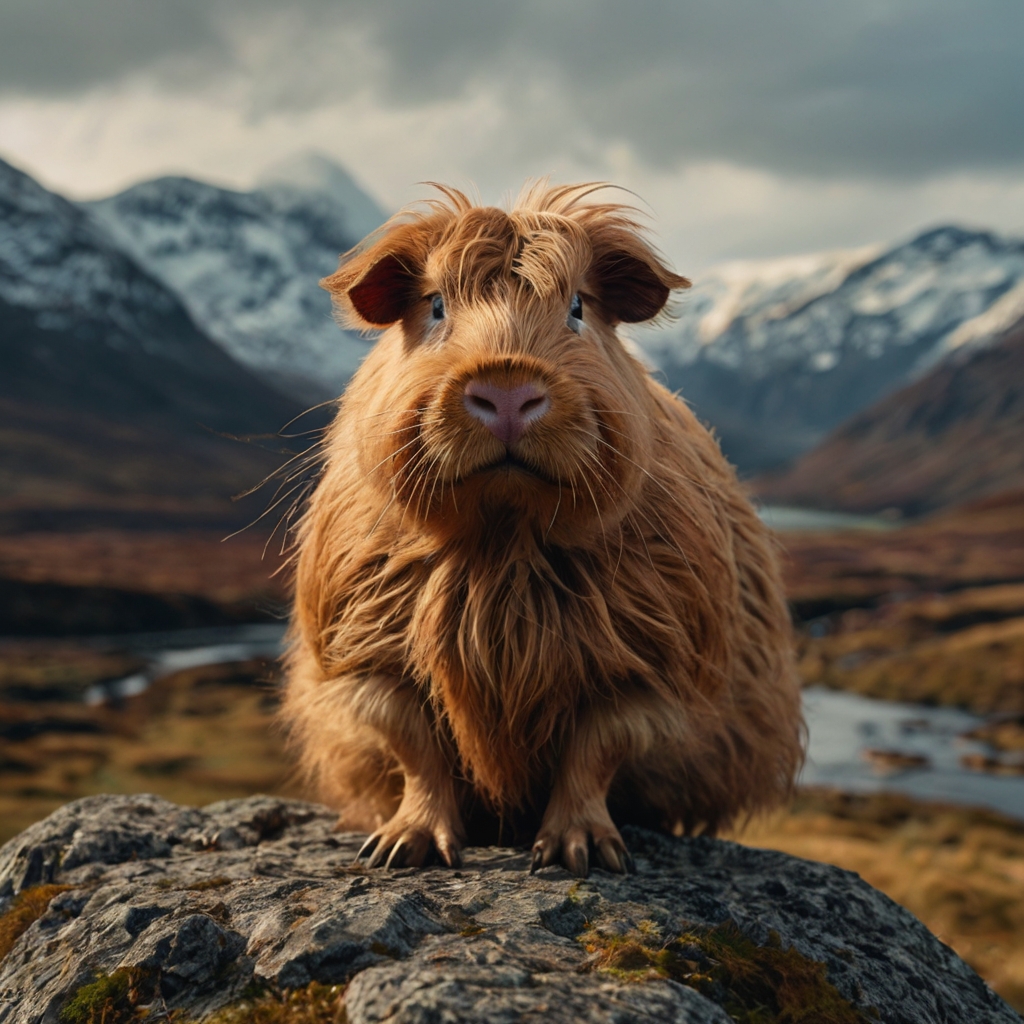
Do I ever see wild animals? Well, yes … and no. Sadly, they’re in a bit of a squishy state and surrounded by turnip and potato when I see them, but I bet they were more than a little bit wild when caught.
These little critters don’t go without a fight, you know.

There are several species of Haggis native to Scotland, generally all found in the more mountainous regions of the country. There, they roam free, hagging (nesting) in the clumps of thick purple heather, the tiny, bell-shaped flowers of which provide a nutritious meal for these small herbivores.
The heather can also be their downfall though. When digested, it gives their poo a distinct and delightfully aromatic odour, which during the shooting season, makes them easy to track by specially trained and licenced Haggis Hunters.
It’s sad, I know, but from a ecosystem and conservation viewpoint, a bi-annual cull is necessary. You see, these often aggressive wee bleeders are prolific breeders! If left unchecked, they become emboldened by their number, and fired up with the juice of fermented rowan berries, have been known to take down red deer stags and Highland cattle and give them a ‘right good doing.’
They attack, research has shown, ‘just for the hell of it’ for as strict herbivores, they don’t eat meat … which is quite ironic when you think about it. However, the rather woke Scottish Government considers the reason for such indiscriminate attacks lies in the unemployment rate amongst haggii (the plural of haggis) and is withholding agricultural subsidies for farmers who do not take on the stipulated number of haggii for work on the farms.
The quota which must be maintained is one breeding pair of haggii for every twenty sheep, or twelve cattle held. Some adult haggii are kept for their meat, but this market is met chiefly from the bi-annual culls mentioned. So, the majority spend their short lives drinking gallons of fresh, Scottish stream water and being fed a mulch of barley and yeast.
Haggii pee bucket-loads, just like their South American guinea pig cousins, and once filtered and treated, this is bottled and sold as premium brand whisky to the unsuspecting continental market … one upside of Brexit, I suppose. 😉 😀
If you visit the Scottish Highlands, keep your eyes peeled for these fascinating little creatures. They are very secretive and their reddish-brown (some may say, ginger) coat provides good camouflage, but if you concentrate on the horizon, you may spot them when they have to cross an area of flatland. With two short legs and two longer back legs, their backside pops up in the air every second step.
Be careful not to spook them, however, as they’ll immediately head for the hills. Their body shape, unique in the Animal Kingdom, is perfectly adapted to scamper up the steep inclines.
(A basic evolutionary design fault still to be addressed, is that a haggis coming back down the mountain / hillside takes an eternity as this has to be done backwards, with continuous glances over its shoulder … a wee tip there if you ever want to capture one. Caution though – they don’t make good house pets due in part to their pugnacious character and liking for Buckfast fortified wine.)
Aye – here’s tae the Haggis! Wild until caught!

Discover more from Cee Tee Jackson
Subscribe to get the latest posts sent to your email.
 Cee Tee Jackson
This was really interesting – I’ve never fancied haggis though!
LikeLiked by 1 person
😉
LikeLike
An elusive and wondrous creature…
👍
LikeLiked by 1 person