
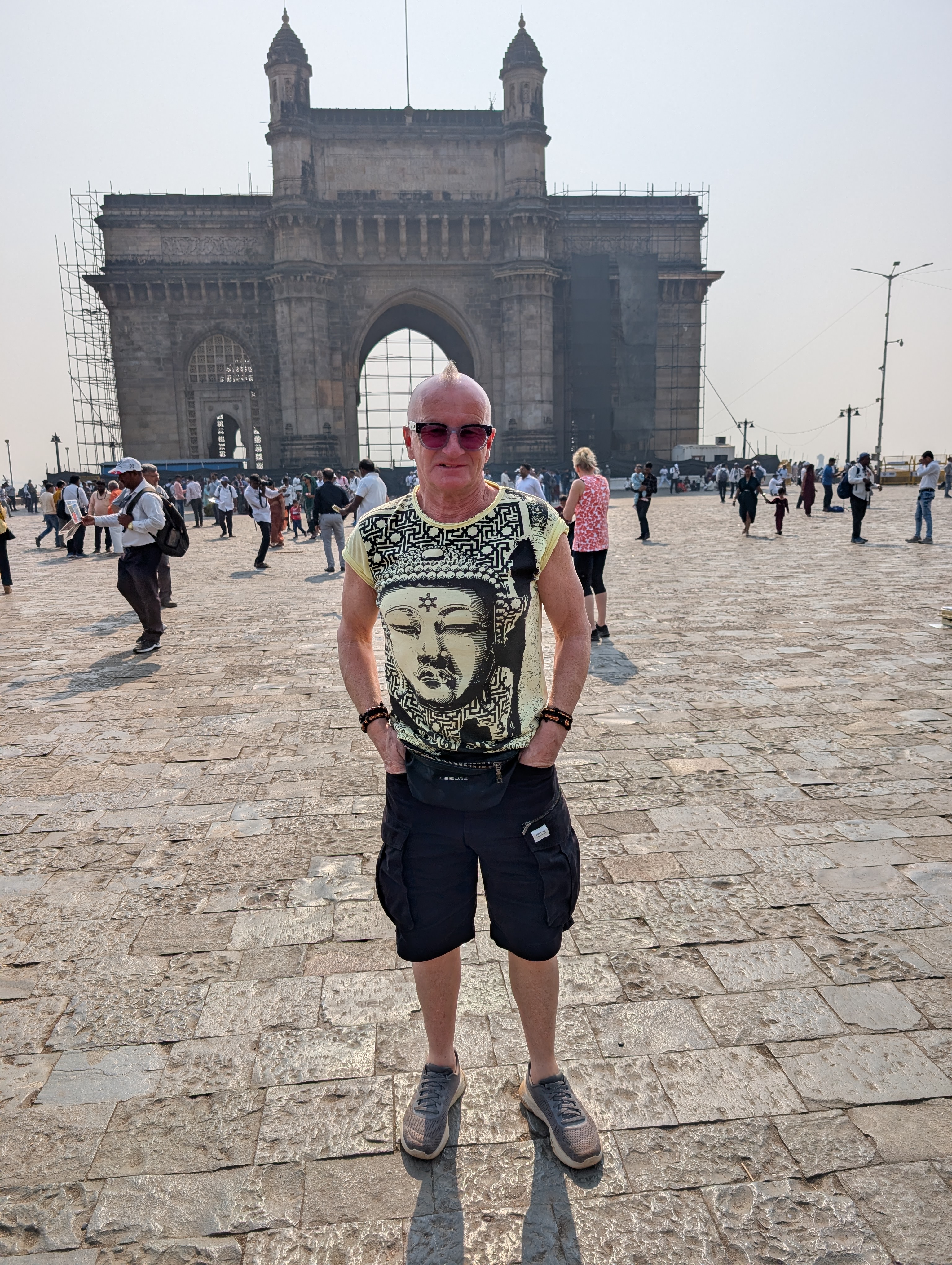
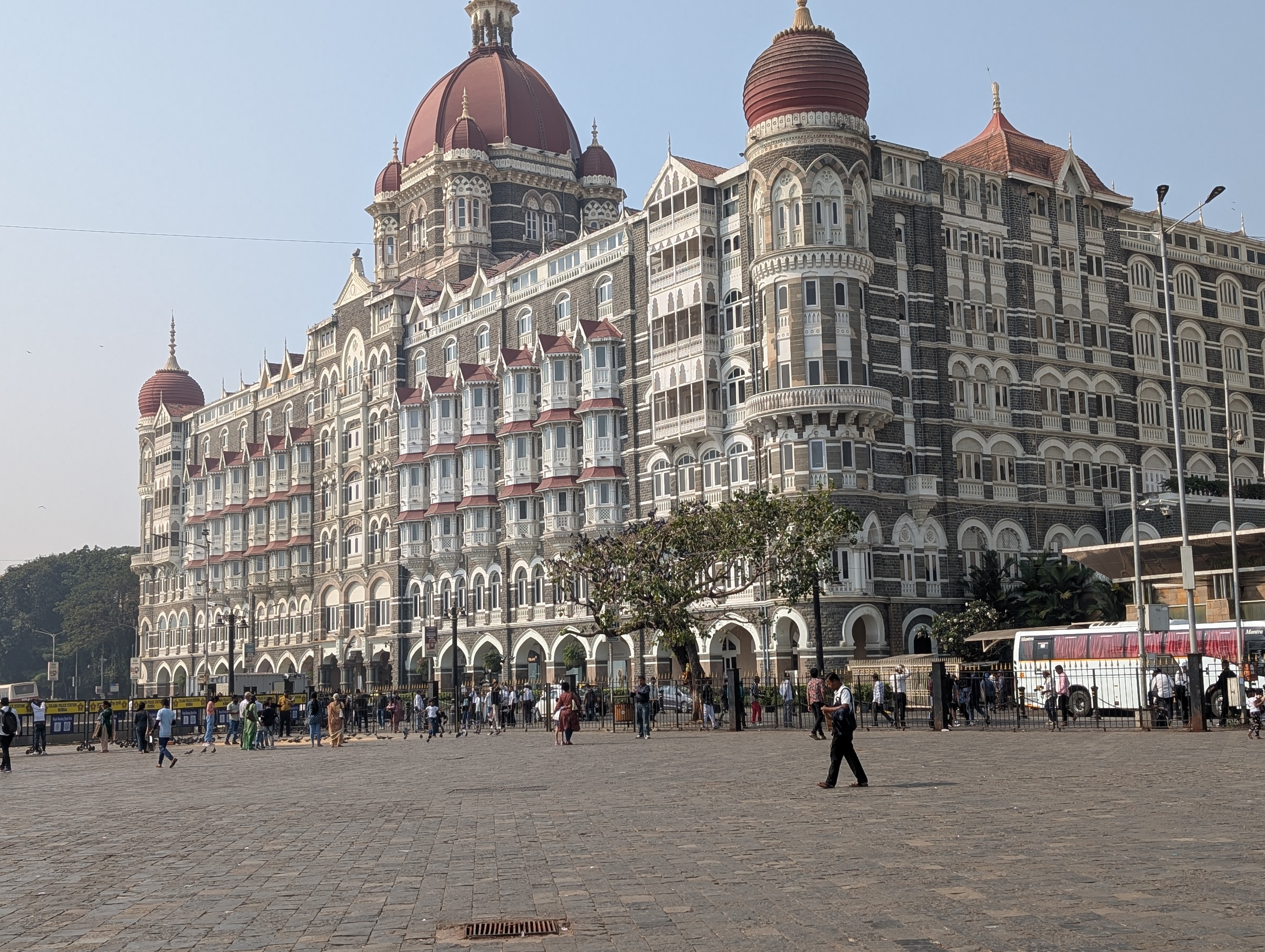

Mumbai is only an hour’s flight north of our apartment in Goa. Never-the-less, it still meant a 4 am departure by taxi to Dabolim Airport. Thankfully, our plane left from the older, though recently renovated of Goa’s two airports, and was reached after only a twenty-five minute drive as opposed to an hour or so to Manohar (Mopa) International Airport.
I had wanted to visit Mumbai for many years and was excited to now have the opportunity.
Wow! What a city! It was everything I expected – and more!
With only two days booked into our Air BnB apartment on the Colaba peninsula, we were straight into visiting the sights.
First up was an hour-long boat trip over to the UNESCO World Heritage site on Elephanta Island. The caves, which served as a Hindu temple were partially destroyed by the Portuguese when they ceded the island to the British in 1661. However, what remains and been restored are remarkable examples of stone carvings made up to fourteen hundred years ago.

The following day we crammed in a lot!. Unfortunately, given the opportunity to visit the second largest Bollywood studio in Mumbai, S.J. Studios, we spent a bit too much there and had to forgo some other sights.
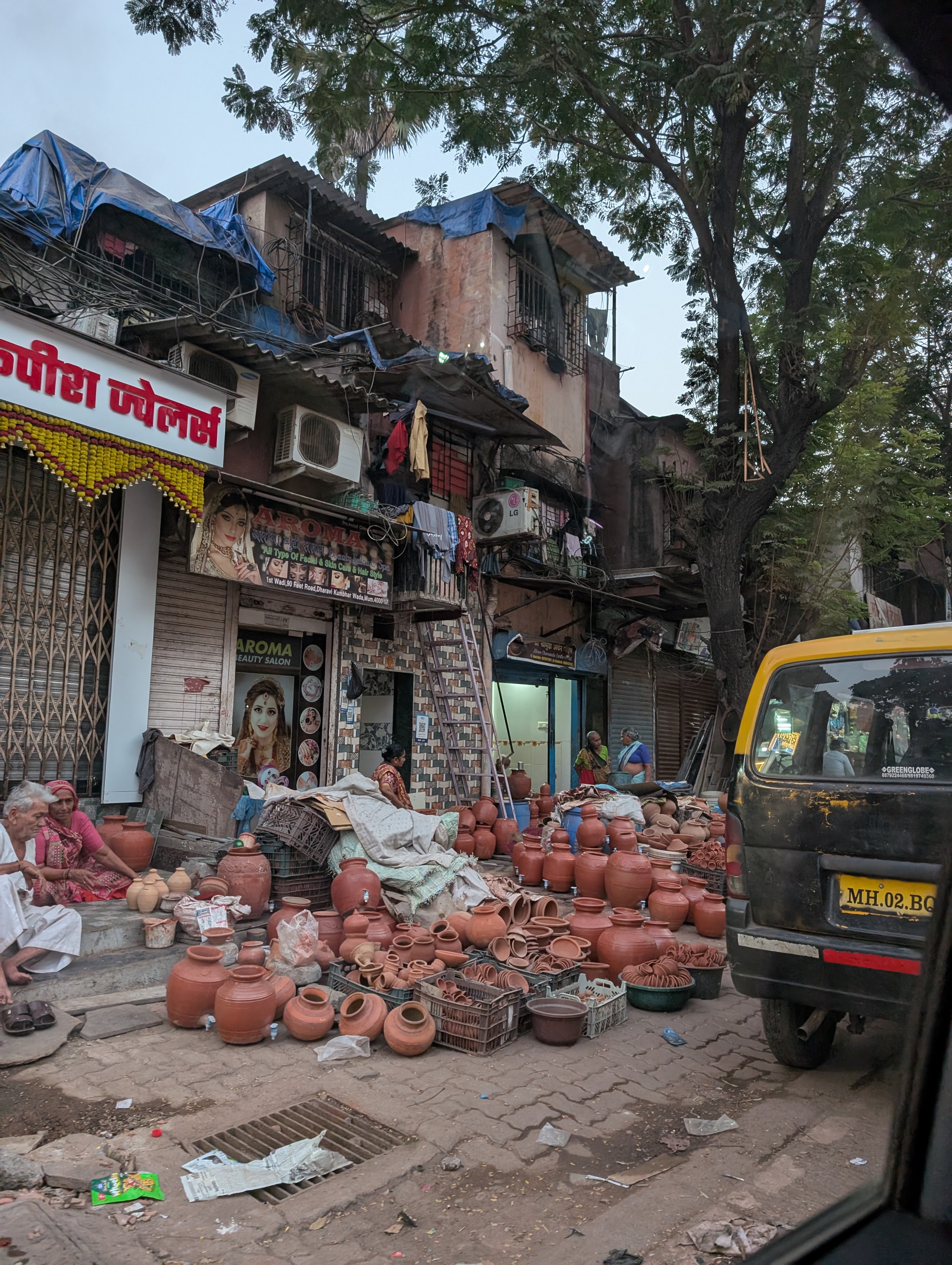
We did manage to spend a couple of hours in the famous (infamous) Dharavi Slums though. I was very conscious of the fact we could be seen as ‘those rich people from the West, come to gawp at us poor people’ but our guide, Kamlesh assured us we’d be welcomed as the residents recognize that the money he brings into the area (he grew up and still lives in the slums himself) benefits the area.
And we were. We walked around various areas, each specializing in the recycling or manufacture of different goods: there was the plastic collection and recycle area; one that produced industrial soap; one that tanned leather; one for weaving and textiles etc etc.
Though it may not have looked it, everything was organised and people worked so hard both individually and collectively. The conditions were bad, there’s no denying. Tight and cramped (there are over one million residents living in an area of just over two square kilometers) it is one of the most densely populated areas in the world.
And just when we thought they couldn’t get worse, we were led down a long alley wide enough for only one person to walk, with dangerously low-hanging wires and cables and goodness knows what running through the broken cobbled walkway. The heat was so oppressive and very little sunlight managed to pierce the stacked buildings. Rickety old wooden or metal ladders were periodically propped against the walls and used by residents living in the higher spaces.
I cannot imagine how it must be to live in such conditions. There was electricity and power through most of the area we visited, with huge banks of meters evident every now and then. However, water was rationed and on the day we visited, each area had been allocated only a three hour period in which it was available. So buckets were filled and then siphoned off as required throughout the day.
Yet despite all this, we saw so many happy, smiling faces – especially among the children. Out of respect though, we didn’t take photos of either the worst living conditions or the kids.
Some of the younger children would come giving us ‘high fives’ and some would very politely ask for money or food. One image that will last with me forever though is of three kids, I’m guessing from the same family.
We were walking up a crowded alley. It was pretty claustrophobic, between the heat and the dilapidated buildings rising skywards. There was just enough room for two adults to walk past each other.
And yet a lad, perhaps nine years old was bowling a plastic cricket ball to a girl, aged maybe around six, who held a plastic bat. Behind them was a four-year-old wicket keeper … but without the wickets, or gloves!
They were all smiling and laughing just as kids of more affluent areas of the world would.
It was so heart-warming.
We visited our guide’s home, in which his extended family of twelve live. I was invited to climb up to the first floor and met his wife. His parents and grandparents, who were charming and welcoming, were of an age they couldn’t clamber up the steep ladders to the first and second floors, so lay on the small ground floor to sleep and eat.
But despite this, Kamlesh does not want to leave the slum. There are plans afoot to raze much of it the ground, and rebuild ‘proper’ accommodation. But he, and he says the majority of residents, do not want this as they would lose the sense of community which is so important to the people of Dharavi.
Even more so than the rest of Mumbai, the slums are overcrowded, crazy and chaotic. But I loved it. I found the people wonderfully industrious, enterprising and inspiring.
I wouldn’t want to live there, no. But I’m so in awe of those that do.




Discover more from Cee Tee Jackson
Subscribe to get the latest posts sent to your email.
 Cee Tee Jackson
While it seems insensitive to a westerner to tour a slum, being exposed to that level of abject poverty must be a powerful experience.
LikeLiked by 1 person
It was – but it also shows how happy people can be without the need for tangible wealth. (I know that’s a grossly generalising statement to make, and many residents will not have a pleasant life at all, but it is indeed an eye-opener for us all.)
LikeLike
This is such an interesting post. Makes you think how people live.
LikeLiked by 1 person
Thanks Esther. It does make me question what I think I ‘need’ to get by.
LikeLike