
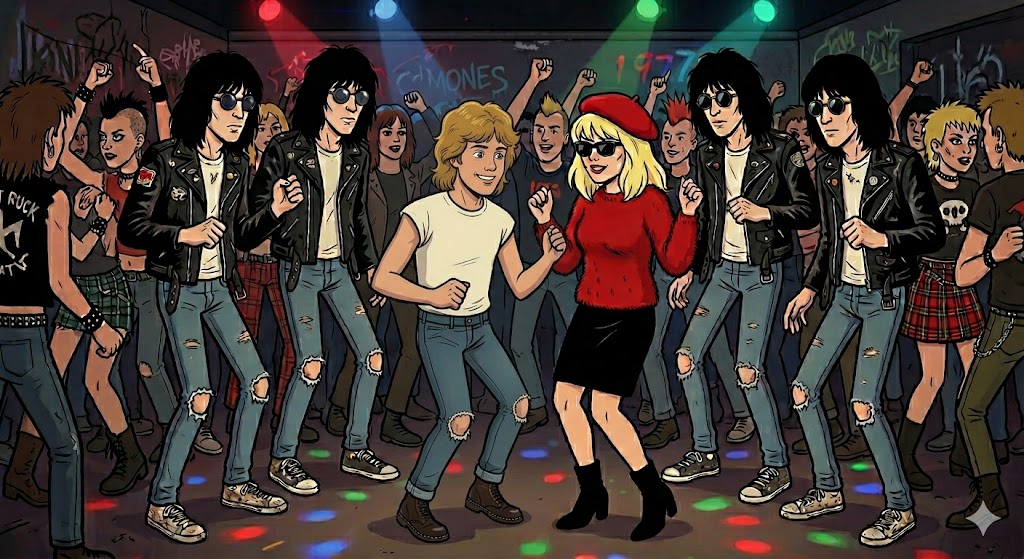
*(Sigh!)* The 21st May 1977 – a night I will never really forget.
I was nineteen years old. I’d left school just nine months earlier and my life revolved around athletics, playing football, music and The White Elephant Discotheque in Glasgow’s Sauchiehall Street.
My taste in music was ever expanding. It still is. Almost fifty years later and I’m still discovering new genres that excite me. But in ’77, my staple of Glam Rock, Blues Rock, Southern Rock and just plain ol’ Heavy Rock was about to be usurped by a brash, snot-filled, despised and anti-social noise.
‘Punk Rock’ had entered the British psyche in 1976, of course, with The Sex Pistols’ controversial arrival on the scene. However, the cult of Punk was still pretty much in its infancy, with The Pistols having only released one single, ‘Anarchy in the UK’ by May of the following year. It wasn’t until the end of that month (May 1977) that they really made their mark with ‘God Save The Queen’ being released to coincide with The Queen’s Silver Jubilee celebrations.
The Stranglers had released ‘(Get a) Grip (on Yourself)’ a few months earlier and The Clash, another emerging band of that ilk, released their debut album in April of that year. The whole punk ethos of DIY music was starting to make its mark and bands like The Buzzcocks and The Damned (first single released in October 1976) were gaining traction.
Not in Glasgow, though. Following the notoriety of their television interview with Bill Grundy, The Sex Pistols scheduled show at The Apollo in December 1976 was ‘pulled’ by the local council who perceived Punk rock not as a music scene, but an anti-social threat.
An effective ‘ban,’ lasting the best part of twelve months, became effective in preventing many such shows from within the city boundaries. (It wasn’t a formal ‘ban’ as such – it’s just the council blackmailed venues with the threat of losing their licence, should they host such raucous, violent purveyors of noise.)
Looking to break into the UK market, were a group of bands from USA, mainly New York, whose music, though ‘different’ from that of their UK counterparts, were still classed as ‘punk.’
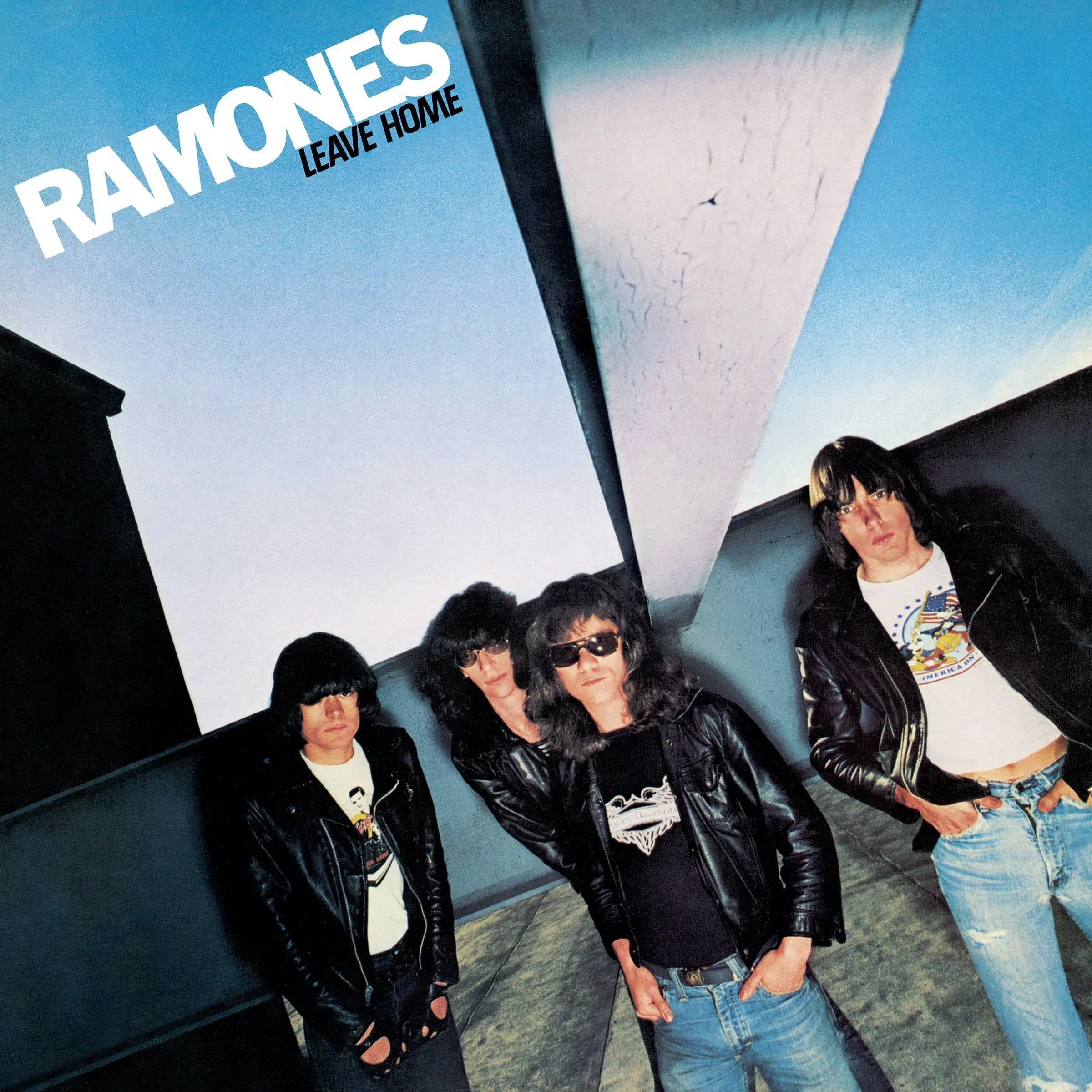
But where could they play if they rocked up in Glasgow? Well, the Student Unions had a bit of autonomy from the City Council, and so when it was announced that The Ramones wanted to come and put on a show to promote their second album, ‘Leave Home,’ Strathclyde University offered its Union hall.
I didn’t go to University. But my mate Derek did. He went to Strathclyde University. Result!
I badgered him to get his hands on a couple of tickets, so he could sign me in as a guest on the night of the show.
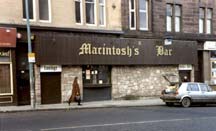
And so it was, we met up that evening, had a good few beers at our favourite city centre pub, The MacIntosh Bar and walked /staggered round to the Student Union. Of course, once in, we headed straight for the bar, where a pint was a fraction of the price in the pubs.
Say no more.
The Ramones were an iconic underground band in May 1977. They were promoting their second album, but the song that arguably defines them, ‘Sheena is a Punk Rocker’ was still a week or two away from a UK release. Fans in their homeland would have to wait a further two months.
They were still considered very niche.
And they were not the only New York based band on the bill that night. Talking Heads were co-headliners. They took to the stage before The Ramones, and though it is most likely there were other bands on before them, I have no recollection – the beers were starting to hit home by this time!
I have to say, though I enjoy their sound nowadays, I was not impressed with David Byrne and the band on the night. I distinctly recall both Derek and I looking at each other … and deciding there was time for yet another lager in the bar before The Ramones took the stage.
When they did, we headed down to the front, right by the stage. It wasn’t a big venue, and estimates of the crowd I’ve seen on the internet range from one hundred to three hundred. I do remember there being big gaps on the audience floor, so I’m sure it wasn’t a complete sell-out.
Anyway, Derek and I were more used to shows at The Apollo, (Rory Gallagher, Sensational Alex Harvey Band, Jethro Tull, Man, Lynyrd Skynyrd etc) where any ‘over enthusiastic’ behaviour was instantly snuffed out by equally over-zealous, over-weight bouncers, whose reputations, like their bellies, went before them.
It was all pretty crazy! People pogoing frantically, crashing into each other, beer being spilt / thrown – all sort of shenanigans. Great fun.
It was then I danced with Debbie Harry.
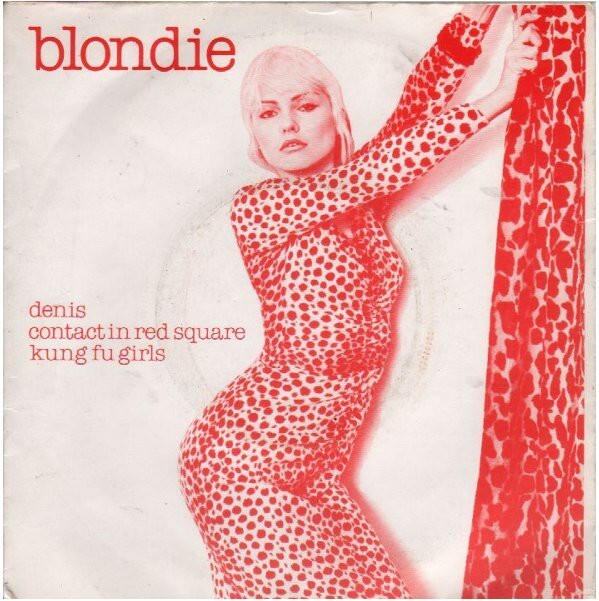
Yes, she was there that night also, supporting her leather-jacket clad friends from Queens.
You see, the New York punk scene had transported itself to Glasgow that weekend. A band named Blondie were due to open for Television the following evening at The Apollo. Blondie were still nine months away from their first UK chart entry. Even in New York they were still very much regarded as cult heroes. So I guess they managed to avoid the ban due to their relative obscurity, and the headliners being considered more ‘art rock’ than ‘punk.
A famous picture taken by Graham Scott from the short-lived Glasgow punk band, The Exile shows Debbie on that very night.
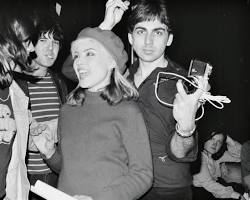
Debbie Harry was there that night. Defo.
I was there that night. Defo.
There was a small crowd in a small, intimate gig venue. Defo.
Everyone was crashing into each other. Defo.
Everyone danced with each other. Defo.
Therefore, quite conceivably, very possibly, I perhaps danced with Debbie Harry.
Look – in the same way I can claim to have lived down the road from Dire Straits guitarist, Mark Knopfler (he moved away as a young lad just before the two-year old me moved in to the street with my parents) I can claim to have danced with Debbie Harry.
*(Sigh!)* The 21st May 1977 – sadly, a night I’ll never completely remember! 🤣
(Post by Colin ‘Jackie’ Jackson from Glasgow – May 2026)
Discover more from Cee Tee Jackson
Subscribe to get the latest posts sent to your email.
 Cee Tee Jackson
Very nice.
LikeLiked by 1 person
[…] That night I danced with Debbie Harry. […]
LikeLike
Can i see your full story?
LikeLike